
AiMi Launches Incident Management Solution to Deliver Real-Time Operational Intelligence Across Trading and Market Data Infrastructure

New agentic AI workflow automates incident creation, classification, and tracking across stock exchange and vendor services, providing a single reference point for all outages, disruptions, and scheduled maintenance.
Stockholm – 4 March 2026 – AiMi, the award-winning fintech bringing agentic AI to trading and market data operations, today announced the launch of its Incident Management solution, designed to give capital markets firms immediate visibility and operational control across trading venue and vendor-related incidents. The new capability transforms fragmented, sporadic outage alerts and service degradation notices into structured, actionable real-time intelligence, automating incident tracking.
Managing trading venue and vendor-related incidents is one of the most time-critical operational challenges facing capital markets firms. With a constant stream of outage alerts, delivery delays, service degradations and maintenance updates, teams must manually reconcile their own operations against notifications from exchanges and service providers to understand the source of the issue and the action required. Regulatory frameworks on both sides of the Atlantic, including ESMA RTS 7, SCI Regulation SCI, and DORA’s ICT major incident reporting requirements, demand that firms detect, classify and escalate operational incidents within tight timeframes. However, with traditional and crypto trading venues and vendors communicating outages in fragmented, unstructured formats, identifying operational impact and filtering background noise demands significant manual effort, leaving firms exposed to delayed response and increased operational risk.
AiMi’s Incident Management solution deploys autonomous, adaptable AI agents to continuously ingest, interpret and structure notifications from stock exchanges and service providers. Each notice is analysed in real-time, with structured incident records created or updated instantly – eliminating manual triage and ensuring that nothing is missed. The solution applies a firm’s custom business logic and trading and market data infrastructure inventory to identify the specific impact on the firm, ensuring each record reflects real-world operational impact. AiMi’s agents continuously:
- Ingest and interpret unstructured outage alerts, degradation notices and maintenance updates from trading venues and vendors
- Classify operational impact based on severity, environment, and a firm’s specific trading and market data footprint
- Maintain a complete, auditable incident lifecycle from first alert to final resolution
Every state change, severity update, communication and resolution action is captured in a structured, auditable timeline, giving operations and technology teams complete visibility across active and historical incidents through severity dashboards, state tracking and advanced filtering. When action is required, AiMi integrates directly with internal platforms including Jira and Slack, enabling seamless handoff to delivery teams and ensuring incidents are resolved with the same speed and precision with which they are reported.
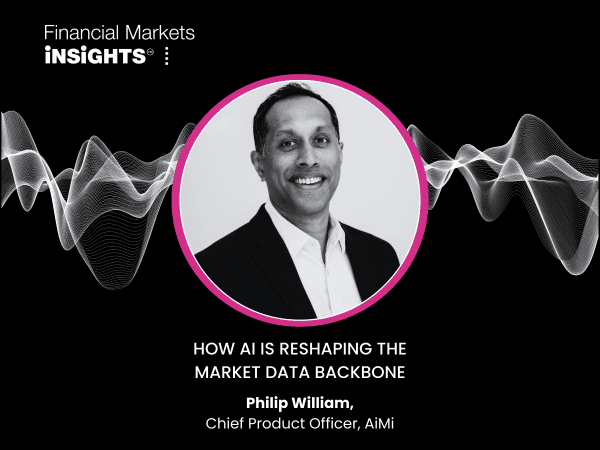
“When responding to infrastructure alerts, firms must manually reconcile their own operations against the notifications sent by exchanges and service providers – often spending valuable triage time investigating what turns out to be a street-wide issue. Our Incident Management solution streamlines that process, giving firms a consistent, reliable reference point for known outages, issues and scheduled maintenance, whilst ensuring that lower-severity events such as file delays and price restatements receive the attention they deserve rather than being lost in the noise.”, explained Philip William, Chief Product Officer at AiMi.
The launch of Incident Management extends AiMi’s end-to-end agentic platform for trading and market data operations, complementing the existing change management workflow for tracking exchange-driven and vendor-driven changes. Firms can now manage the full operational lifecycle – from tracking changes to responding to live incidents – through a single, intelligent platform, with complete traceability and human-in-the-loop oversight at every stage.